
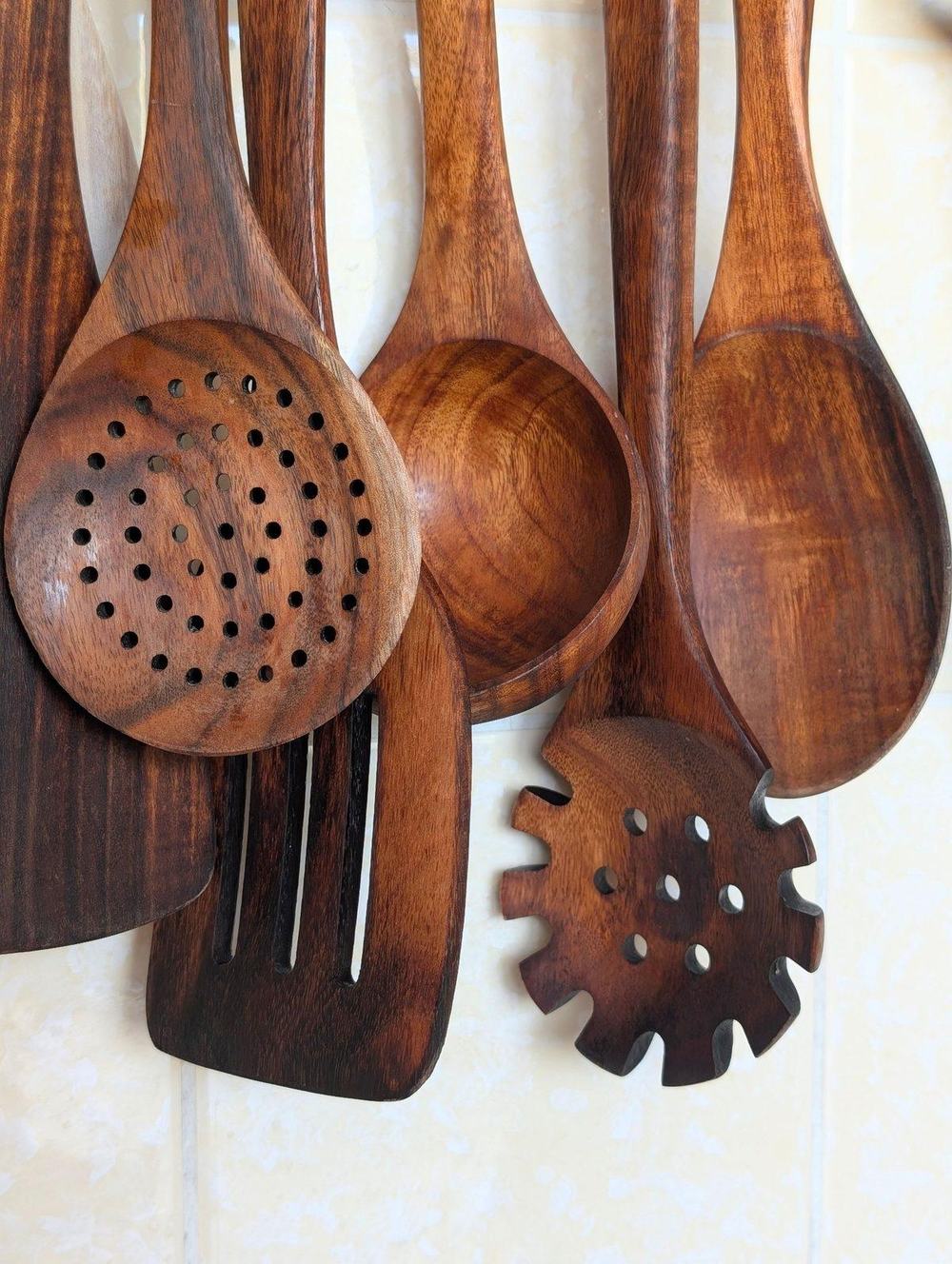
Every kitchen I remember from childhood had a jar of wooden spoons by the stove, dark and smooth from years of use.
Now mine does too, and there is something comforting about it.
1. Kind to Pans and Hands
Wood is gentle: it doesn't scratch pans or melt on a hot edge, and it stays cool to hold. A good set covers almost everything: stirring soup, flipping eggs, serving pasta, scraping the bottom of the Dutch oven.
2. They Get Better With Time
Wooden utensils darken and smooth with every year of use, like the cast iron skillet. Mine live in a ceramic crock right by the stove.
The Kitchen Edit
A set of natural wooden cooking utensils: spoons, spatula, ladle and pasta server for everyday cooking.
Shop the Edit3. Honest Notes
Wood doesn't like the dishwasher or long soaking; it can crack or turn rough. Wash by hand, dry right away, and oil them now and then. Strong colors like turmeric or tomato may tint lighter wood.
4. How to Choose
- Hardwoods like teak, olive or acacia last longest.
- A set with a ladle and slotted spoon covers most cooking.
- Smooth, one-piece utensils have no joints to trap food.
- Long handles keep hands away from heat.
5. Questions People Ask
How do I care for them? Wash by hand, dry upright, and rub with food-safe mineral oil every few weeks.
Do they hold smells? A little, at first. Rinsing with lemon or baking soda helps.
Some kitchen tools are bought. The good ones end up being inherited.