
There is a particular kind of Sunday I love: nowhere to go, a grey sky outside, and something cooking slowly for hours. By afternoon the whole house smells like home, and nobody needs to ask what we are having for dinner.
Most of those Sundays happen in one heavy pot.
1. Bread With a Crackling Crust
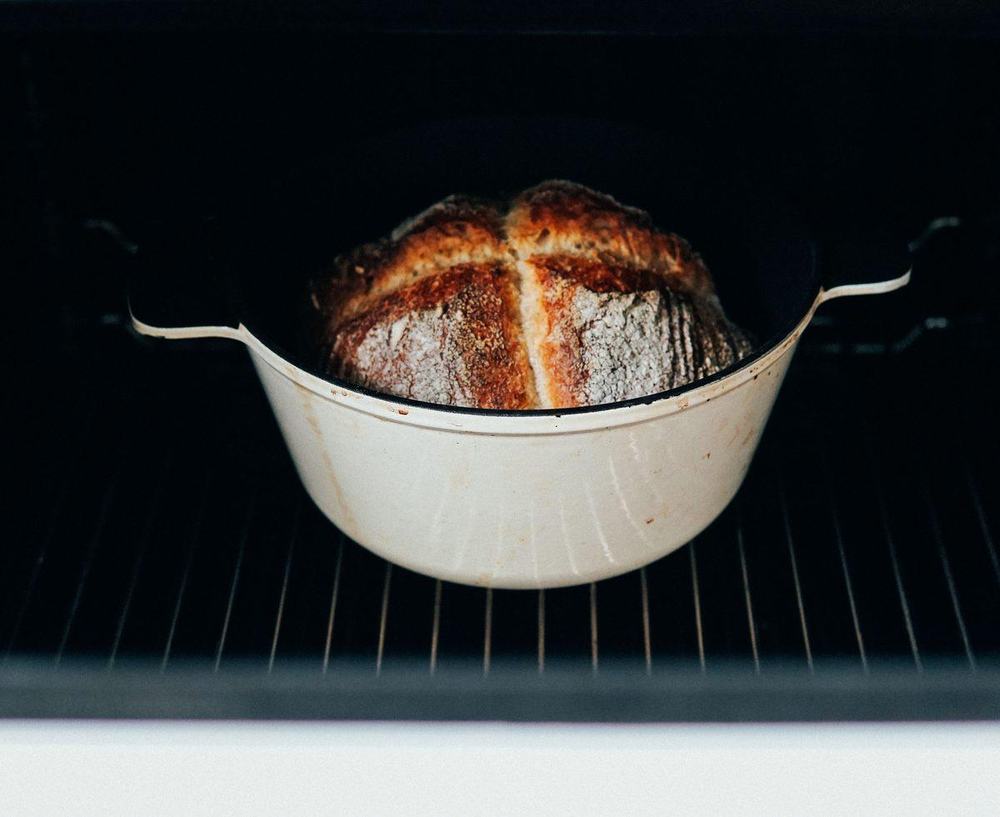
The first time I baked bread in a Dutch oven, I couldn't believe it came from my own kitchen. The heavy lid traps the steam from the dough, just like a professional bakery oven, and when you take the lid off for the last part of baking, the crust turns deep golden and crackles as it cools. If you bake bread too, the dough rests in a proofing basket first; I wrote about mine in the banneton story.
2. Soups, Stews and Patience
Enameled cast iron spreads heat evenly and holds it for a long time, so a stew can simmer for hours on low heat without burning at the bottom. It goes from the stovetop into the oven and straight onto the table, and it is beautiful enough to serve from. A pot like this asks for patience, and gives back something warm for everyone.
The Kitchen Edit
An enameled cast iron Dutch oven with a heavy lid, for crusty bread, soups, stews and anything that cooks slowly.
Shop the Edit3. Honest Notes
A Dutch oven is heavy, especially when full, so think about who will be lifting it and where you will store it. The enamel is tough but can chip if the pot is dropped or knocked against hard surfaces, and it doesn't like sudden temperature changes: never pour cold water into a hot pot. Check the maximum oven temperature of the lid knob before baking bread at high heat.
4. How to Choose
- A round pot of about 5 to 6 quarts works for bread, soups and stews for a family.
- A light-colored enamel inside makes it easier to see how food is browning.
- Wide, comfortable handles matter when you lift it with oven gloves.
- A tight, heavy lid keeps moisture in, which is the whole secret.
5. Questions People Ask
Do I need to season enameled cast iron? No. Unlike bare cast iron, the enamel coating doesn't need seasoning.
How do I clean burnt bits? Fill the pot with warm water and a spoonful of baking soda, simmer for a few minutes, then wipe with a soft sponge. Avoid metal scrubbers on the enamel.
Some meals are made quickly. The best ones are made slowly, in one heavy pot.