
On weekends, my husband makes slow pour-over coffee: measuring, circling the water, taking his time (that ritual is in Rain on the Window, Coffee Poured Slowly). I love it. But I'm less patient.
My ritual is simpler.
1. Four Minutes of Nothing
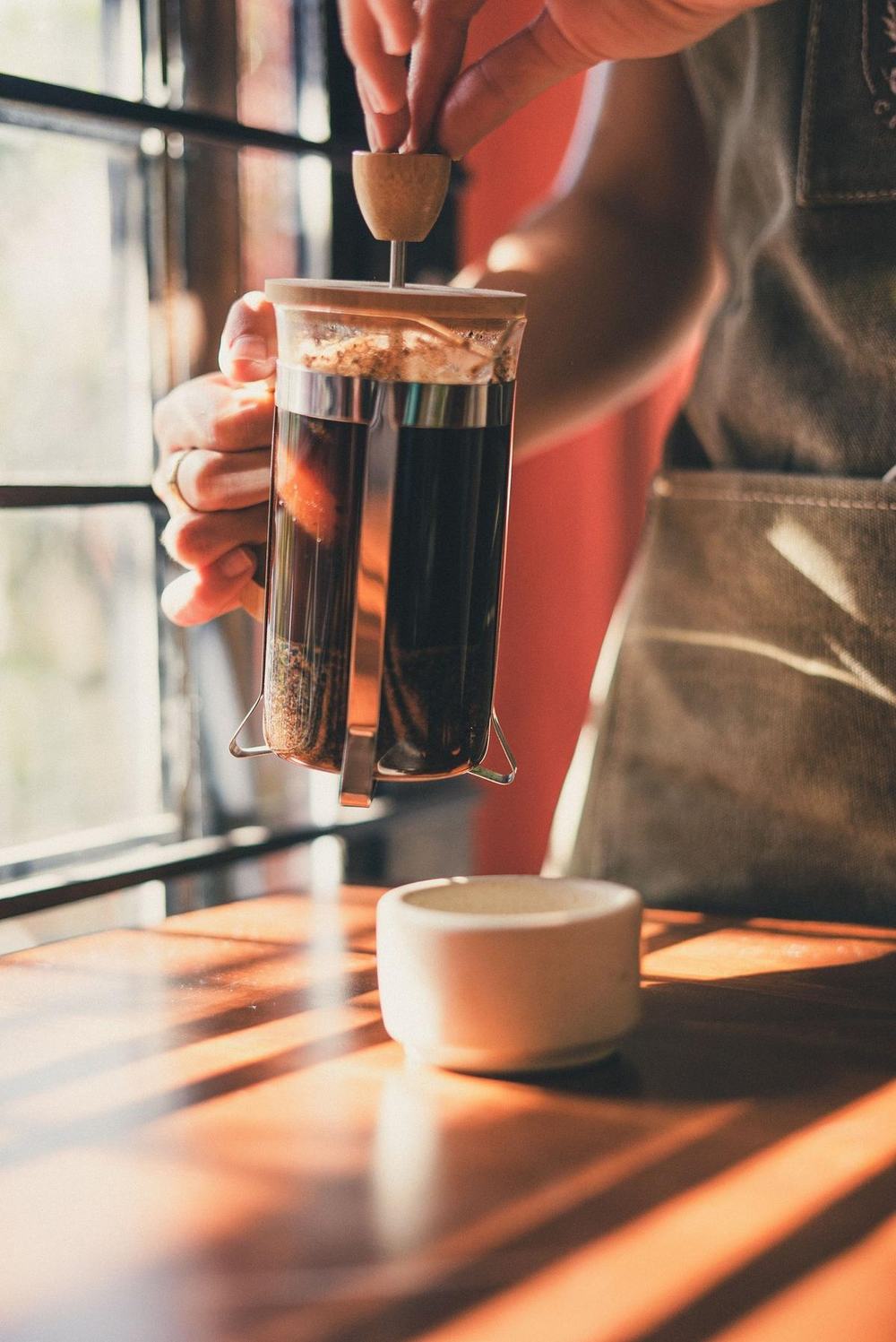
Coarse coffee. Hot water. Four minutes. While it steeps, I stand by the window and do nothing at all. No phone, no list, no planning. Then one slow press down, and the kitchen smells like Sunday.
Same peace as his, fewer steps. Sometimes the simplest way is exactly enough.
2. Why French Press Coffee Tastes Different
Because there's no paper filter, more of the coffee's natural oils stay in the cup, and the taste is fuller and rounder. It's also forgiving: there's almost nothing to get wrong, which is exactly what I need on a slow morning.
The Morning Edit
A glass French press with a bamboo lid, for rich, full-bodied coffee with no filters and no machine.
Shop the Edit3. Honest Notes
French press coffee has a little fine sediment at the bottom of the cup; that's normal. Use a coarse grind, or the mesh filter clogs and the coffee turns muddy. Glass presses are beautiful but fragile, so handle them gently, and pour the coffee out after brewing so it doesn't keep extracting and turn bitter.
4. How to Choose
- Borosilicate glass handles hot water well.
- A fine double or triple mesh filter means less sediment.
- Size: about 600 ml makes two to three cups.
- A sturdy frame and handle that protect the glass.
5. Questions People Ask
What ratio should I use? A common starting point is about 1 gram of coffee to 15 grams of water, steeped for four minutes.
Can I make tea in it? Yes, a French press works beautifully for loose-leaf tea.
You don't need a complicated ritual. You just need a few minutes that belong to you.