
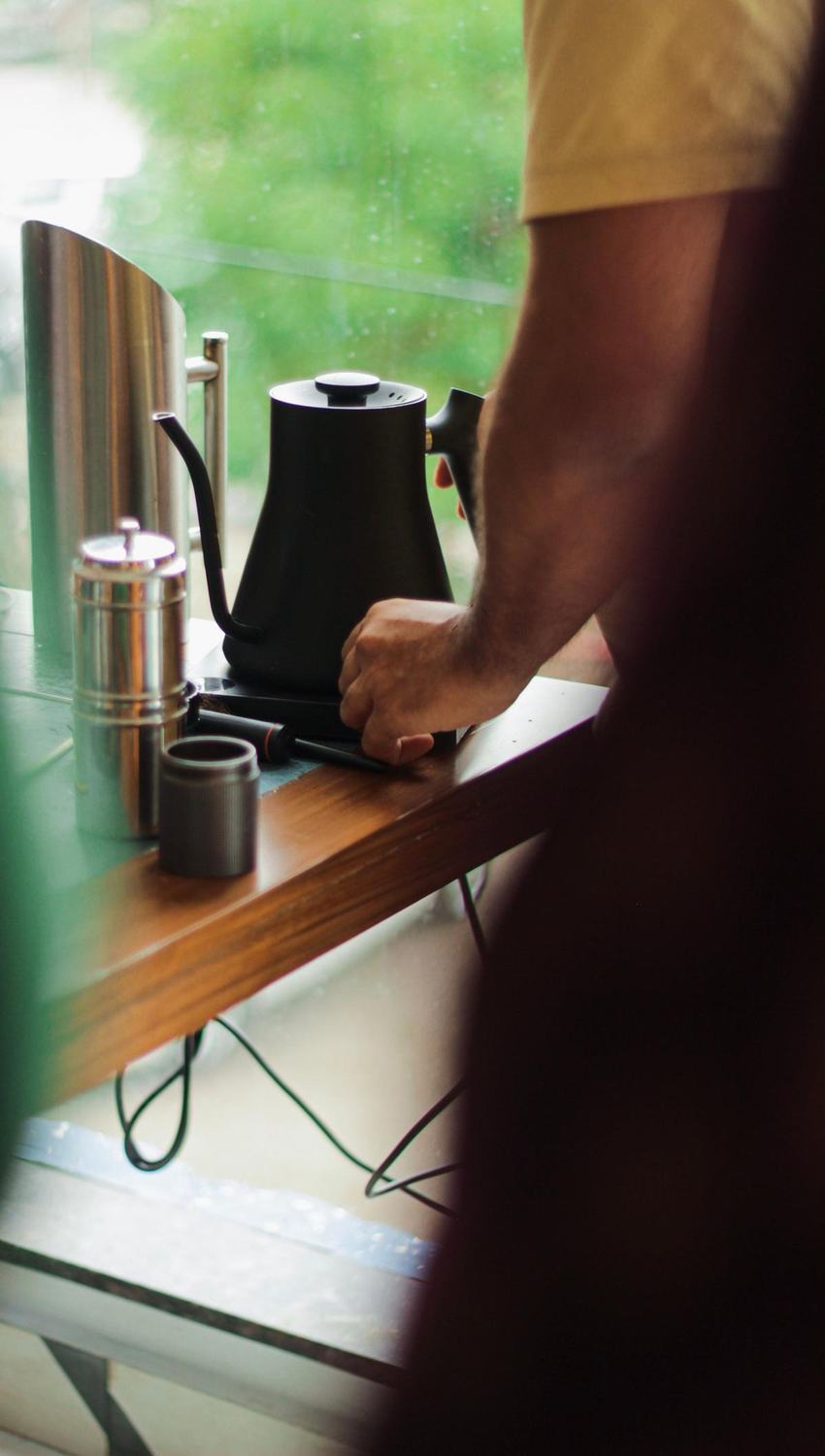
On weekdays, coffee in our house is fuel. It is made fast, drunk standing, and often forgotten halfway on a desk somewhere.
On weekends, my husband makes the coffee. And for years, I teased him for how slowly he poured: a thin, steady circle of water over the grounds, like he had all the time in the world. Then one rainy Saturday I actually tasted the difference, and I stopped teasing.
1. Why the Spout Matters
A regular kettle pours in a rush. A gooseneck kettle has a long, narrow spout that gives you a slow, controlled stream, so the water reaches every part of the coffee evenly instead of flooding one spot. That is the whole secret of good pour-over coffee, and it is also why the water doesn't splash everywhere when you are half awake.
Ours also holds the water at a set temperature. Boiling water is too hot for coffee and much too hot for green tea, which turns bitter. Being able to choose the temperature changed my tea as much as it changed his coffee.
2. The Ten Minutes Before the Day
What I love most is not the coffee itself. It is the ten minutes around it. The sound of the water, the smell filling the kitchen, the rain on the window, nobody rushing anywhere yet. It has become one of those small weekend rituals that tell me the week is over.
Weekdays are still rushed. Saturdays now smell like this. And on the evenings when I need tea and a little honey (more about that in Honey in the Tea, Not All Over the Counter), the same kettle is ready.
The Morning Edit
An electric gooseneck kettle with temperature control and a slow, precise spout, for pour-over coffee and every kind of tea.
Shop the Edit3. Honest Notes
A gooseneck kettle pours slowly by design, so filling a big teapot or a pot for pasta takes longer than with a regular kettle. Most hold a little less water, around 0.8 to 1 liter. And the electric base needs its own spot on the counter, so measure your space before you buy.
4. How to Choose
- Temperature control is the feature that makes the biggest difference for tea.
- A "keep warm" or hold function is useful if your mornings get interrupted.
- A counterweighted handle makes slow pouring easier on the wrist.
- Check the capacity: around 1 liter is enough for two or three cups.
5. Questions People Ask
What temperature is best for coffee? Most pour-over guides suggest water just off the boil, around 195 to 205°F (90 to 96°C).
And for tea? Green tea is usually brewed cooler, around 175°F (80°C), white tea a little cooler still, while black and herbal teas take water close to boiling.
Good mornings rarely happen by accident. Sometimes they start with how you pour the water.