
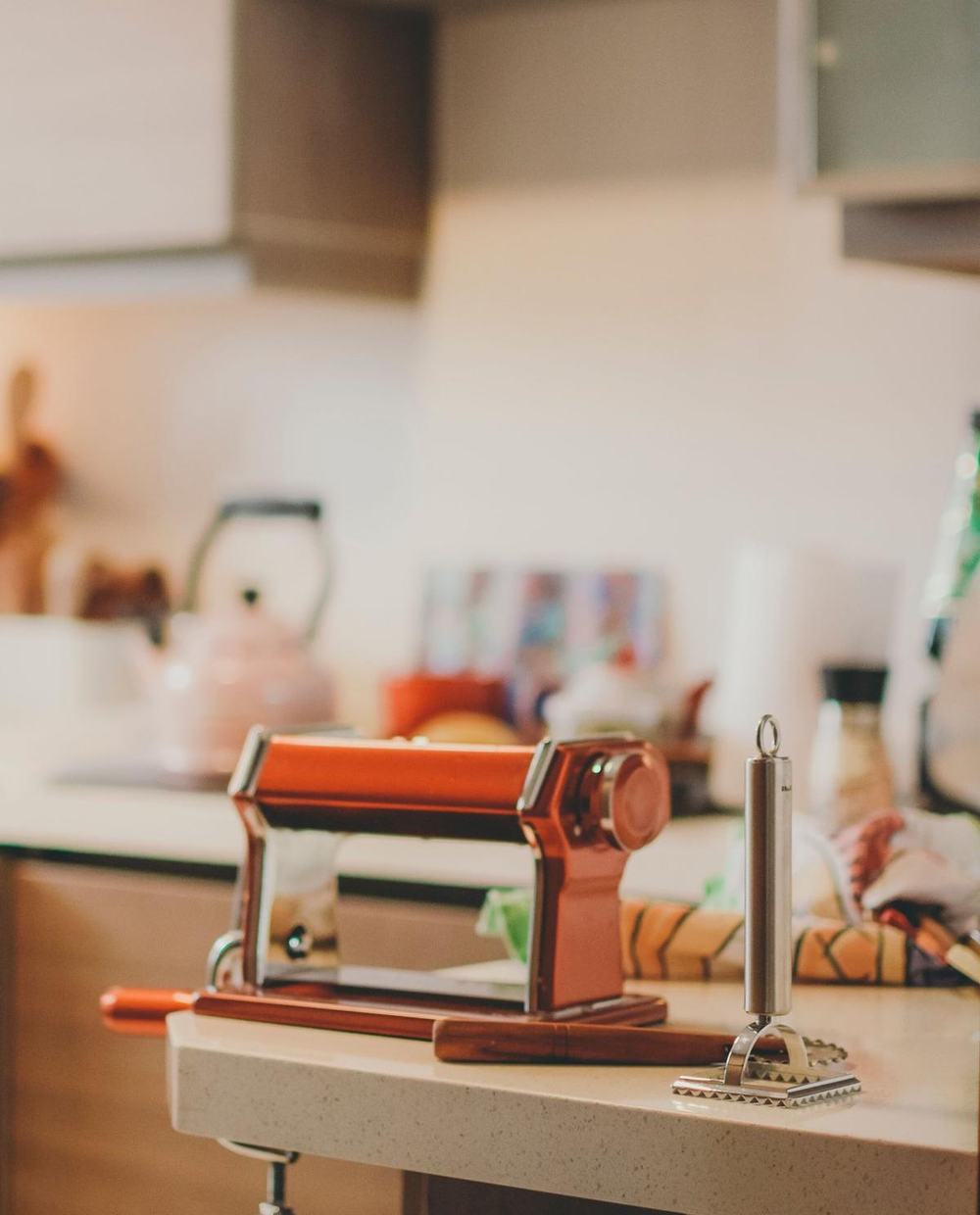
Fresh pasta was always something I ordered in restaurants, never made. It seemed like something for Italian grandmothers and patient people, and I was neither.
Then, one rainy Sunday, I tried.
1. The First Sheets Tore
Flour, eggs, a dough scraper (I wrote about it in Flour, Eggs and One Simple Tool), and a small hand-crank pasta machine clamped to the edge of the counter. The first sheets tore. The second ones were uneven. By the third, I was laughing, flour on my sleeves, ribbons of tagliatelle drying over the back of a chair.
It took two hours. Dinner tasted like the whole afternoon.
2. Why I Keep Doing It
It's not about saving money or time. Fresh pasta is slower than opening a box. It's about having two hours where my hands are busy and my mind is quiet. Turning a handle, feeding the dough through, watching it get thinner and smoother. It's the opposite of my workweek, and that's exactly the point.
The Kitchen Edit
A hand-crank pasta maker that clamps to the counter and rolls and cuts fresh pasta at home.
Shop the Edit3. Honest Notes
A pasta maker needs a sturdy table edge for the clamp. Never wash the rollers with water: brush away dried flour and let it air out, or the mechanism can rust. Expect a few failed batches before the dough feels right; it's part of learning.
4. How to Choose
- Stainless steel rollers are durable and easy to clean.
- Several thickness settings give you everything from lasagna sheets to thin noodles.
- A solid clamp that grips your counter firmly.
- Optional cutters or attachments for different shapes.
5. Questions People Ask
What's a simple pasta dough? A classic starting point is about 100 grams of flour per egg, kneaded until smooth and rested for half an hour.
How do I clean it? Let leftover dough dry, then brush it away. Avoid water and the dishwasher.
Some meals are just food. Some are a whole afternoon you gave yourself.