
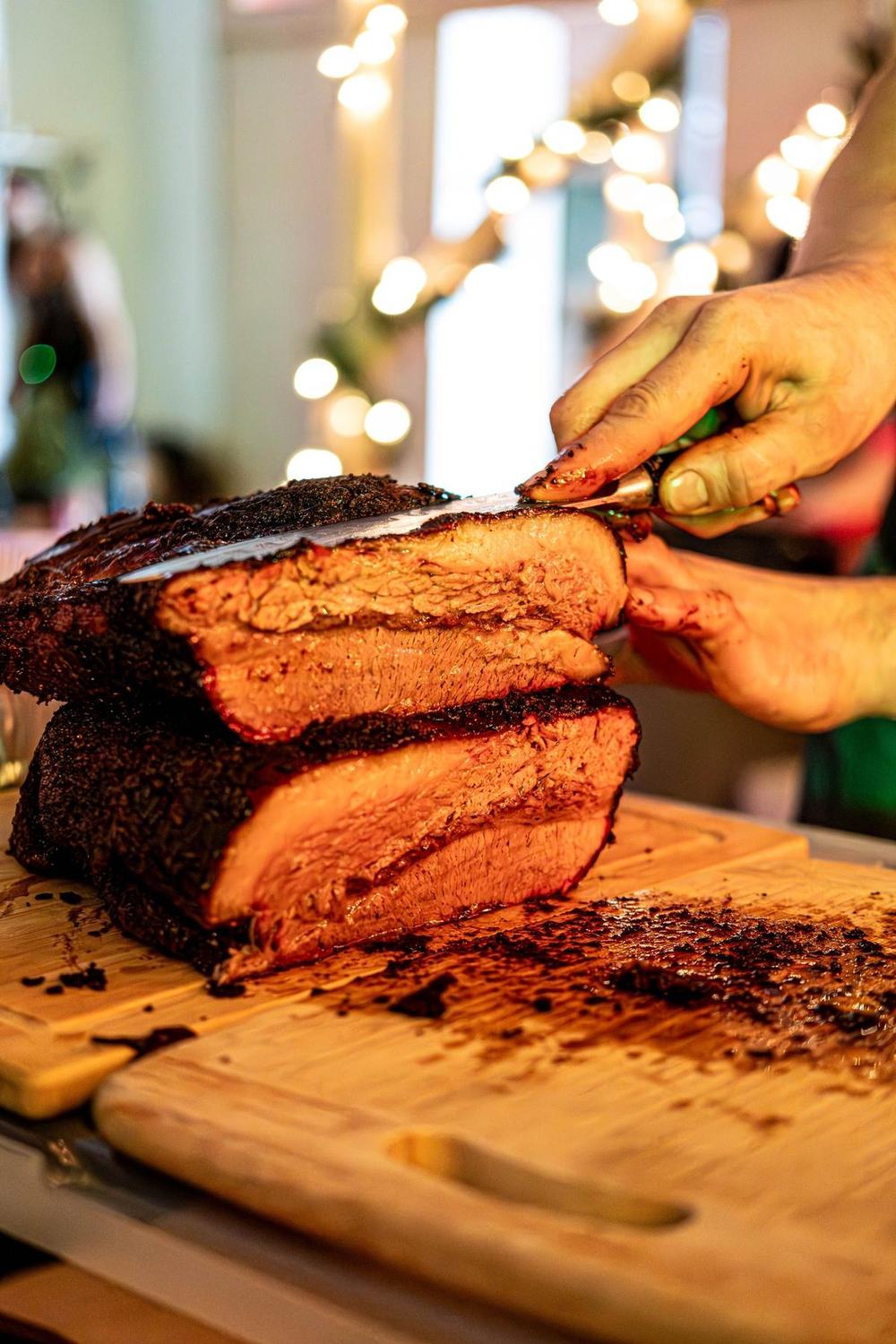
Every holiday dinner, I used to do the same thing. The roast had been in the oven for hours, the table was set, everyone was hungry, and I would take a knife and cut into the meat "just to check." The juices I had waited all afternoon for ran out onto the board. And half the time I still wasn't sure.
After a long week of being careful at work, I don't want to be careful in the kitchen too. I want to know. A small thermometer gave me exactly that.
1. Guessing Is Exhausting
On weeknights the problem is different but just as tiring. It is the chicken wings or the ribs from the freezer, the ones I sealed on shopping day for exactly these evenings (I wrote about that in Portion Once, Waste Nothing). They look done on the outside. Are they done inside? I used to leave them in "five more minutes" to be safe, and five more minutes is how you end up with dry meat.
An instant-read thermometer ends that conversation with yourself. You push the tip into the thickest part, wait two or three seconds, and you have a number. Not a feeling, not a guess. A number.
2. The Roast Stays Whole Until It's Time
The first holiday I used one, nobody cut into anything before dinner. The meat rested properly, and when my husband finally sliced it, it was juicy from edge to edge. "So that's why it's different now," he said. I didn't tell him it was a small gadget in the drawer. Let him think it was me.
It changed something for me that wasn't really about meat. I stopped standing at the oven door with a knot in my stomach. I still overthink the side dishes. But the main course is no longer the thing I worry about.
The Kitchen Edit
An instant-read meat thermometer that gives a clear reading in seconds, for roasts, chicken, fish and everything in between.
Shop the Edit3. Honest Notes
A thermometer only works if you measure in the right place: the thickest part of the meat, away from bone and fat, which both give false readings. A cheap model can drift over time, so check it now and then in a glass of ice water, where it should read 32°F (0°C). And it does not replace resting the meat: a large roast keeps cooking for a few minutes after it leaves the oven, so take it out a few degrees early.
4. How to Choose
- Look for a fast reading: two to four seconds is what makes it pleasant to use.
- A thin probe leaves a smaller hole and lets out fewer juices.
- A backlit, rotating display is easier to read over a hot oven or grill.
- A water-resistant body is easier to wipe clean, and a magnet on the back keeps it on the fridge door, always within reach.
5. Questions People Ask
What temperature should chicken reach? Food safety guidelines recommend 165°F (74°C) for chicken and turkey, measured in the thickest part.
And pork or beef? Whole cuts of pork, beef and lamb are generally considered safe at 145°F (63°C) followed by a three-minute rest, while ground meat should reach 160°F (71°C). Slow-cooked cuts like brisket or ribs are taken much higher, around 195 to 203°F, so the connective tissue softens.
Some tools make you a better cook. This one simply makes you a calmer one.