
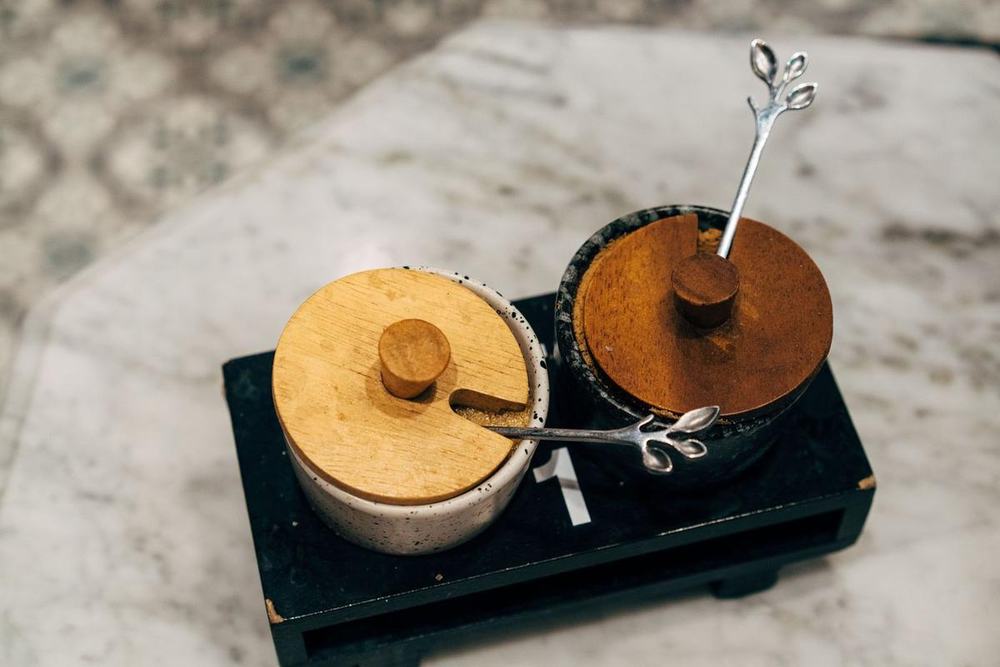
Cooking dinner after work is when my day finally slows down, and it is made of small gestures. When I make a low-fat beef stew, I always want to feel the salt with my fingers, a pinch at a time, so the dish stays as delicious as it is meant to be. That is why I prefer cellars to shakers, and why two quiet pieces by the stove look calmer to me than a jumble of packets and grinders.
1. Why Cellars Instead of Shakers
A salt cellar lets you take salt with your fingers or a small spoon, so you can feel exactly how much you are adding. It is how many cooks season: by touch, not by guesswork. Keeping salt and pepper in two matching cellars by the stove also clears away the jumble of packets and grinders, and leaves one quiet, tidy corner on the counter.
2. Beautiful Enough to Leave Out
Marble brings a cool, natural texture to the kitchen. Every piece has its own veins and color, so no two sets look exactly the same. With lids and tiny spoons, the cellars look finished and cared for, and they can go straight from the stove to the table when guests come over.
The Counter Edit
A pair of marble salt and pepper cellars with lids and spoons, simple, natural and made to live by the stove.
Shop the Edit3. Honest Notes
Marble is natural stone and slightly porous, so wipe it with a soft damp cloth and dry it well, and keep it out of the dishwasher. Acidic things like lemon juice or vinegar can dull the surface, so wipe spills quickly. Salt can clump in a humid kitchen: a lid helps a lot, and a few grains of dry rice inside are an old trick to keep it loose.
4. How to Choose
- Choose cellars with lids if your kitchen gets steamy; they keep salt dry and dust out.
- A swivel or magnetic lid can be opened with one hand while you cook.
- Check the capacity: small cellars look elegant but need refilling more often.
- Each marble piece is unique, so expect slight differences in color and veining from the photos.
5. Questions People Ask
Can I put pepper in a cellar too? Yes, especially coarsely ground pepper or spice blends. Whole peppercorns stay freshest in a grinder, so many cooks keep a cellar for everyday seasoning and a grinder for finishing.
Does salt damage marble? Dry salt does not harm marble, but moisture and acidic spills can. Keep the cellars dry and wipe them clean regularly.
Is it safe for food? Look for a listing that says the cellars are food-safe, and check whether the inside is sealed or glazed.
Small rituals make a kitchen feel like home. Sometimes the simplest one is just a pinch of salt, always within reach.