
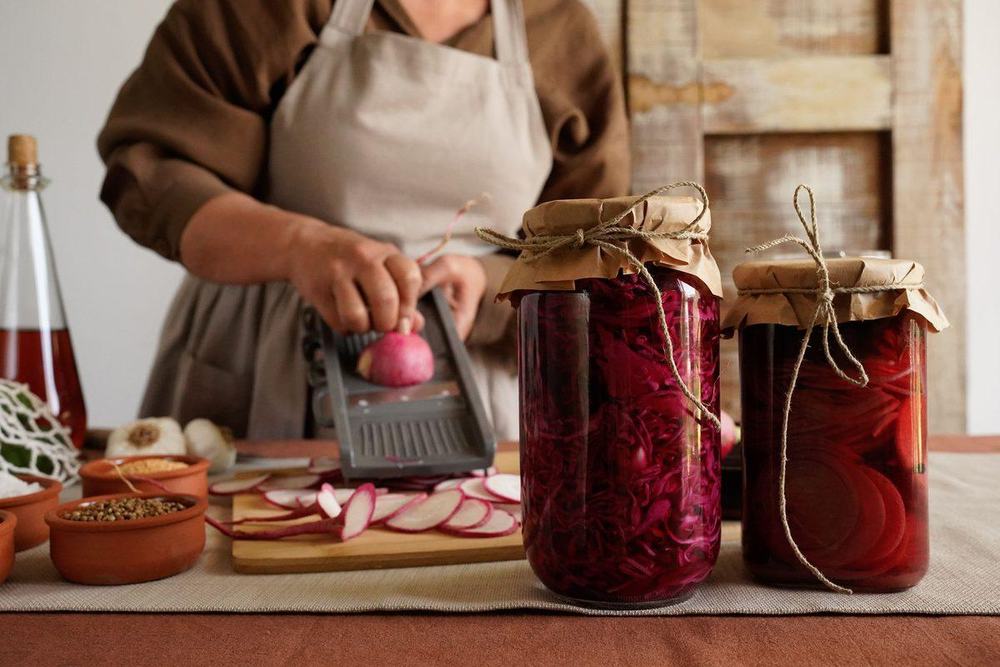
In Georgia, autumn has always meant jars: pickled vegetables lined up in the pantry, ready for winter.
Fermenting at home is the slowest kind of cooking, and maybe that is why I love it.
1. How It Works
You slice or shred vegetables, add salt, pack them into a jar, and wait. Special lids let the gases escape while keeping air out, and glass weights hold the vegetables under the brine, which is the secret to good fermentation.
2. A Slow, Satisfying Ritual
Red cabbage, beets, cucumbers, carrots with garlic. A quiet afternoon of slicing, and then a few days of watching the colors change on the shelf. It is a little like waiting for bread to rise.
The Kitchen Edit
A fermentation kit for wide-mouth mason jars with airlock lids and glass weights.
Shop the Edit3. Honest Notes
Fermenting is simple but needs clean jars and the right amount of salt; follow a trusted recipe, especially at first. Mason jars are usually not included, so check what you need. A strong smell is normal in the first days.
4. How to Choose
- Make sure the lids fit your jars (wide-mouth is most common).
- Glass weights are easier to clean than ceramic.
- Airlock lids save you from opening the jars to release gas.
- A recipe booklet helps beginners.
5. Questions People Ask
How long does it take? Most vegetables ferment in three days to two weeks, depending on the temperature and recipe.
Are jars included? Often not. Check the listing.
Some good things only need patience.