
I need to say this first: I had never drawn anything in my life. Not as a child, not as an adult. I was the one who organized and planned, not the one who made beautiful things.
And then, in one of the hardest periods of my life, I poured paint onto a canvas and watched it move. The whole story of that first painting is in my Journal: The Paint Goes Where It Wants. This page is the practical part, for anyone who wants to try.
1. Why Fluid Art Is Different
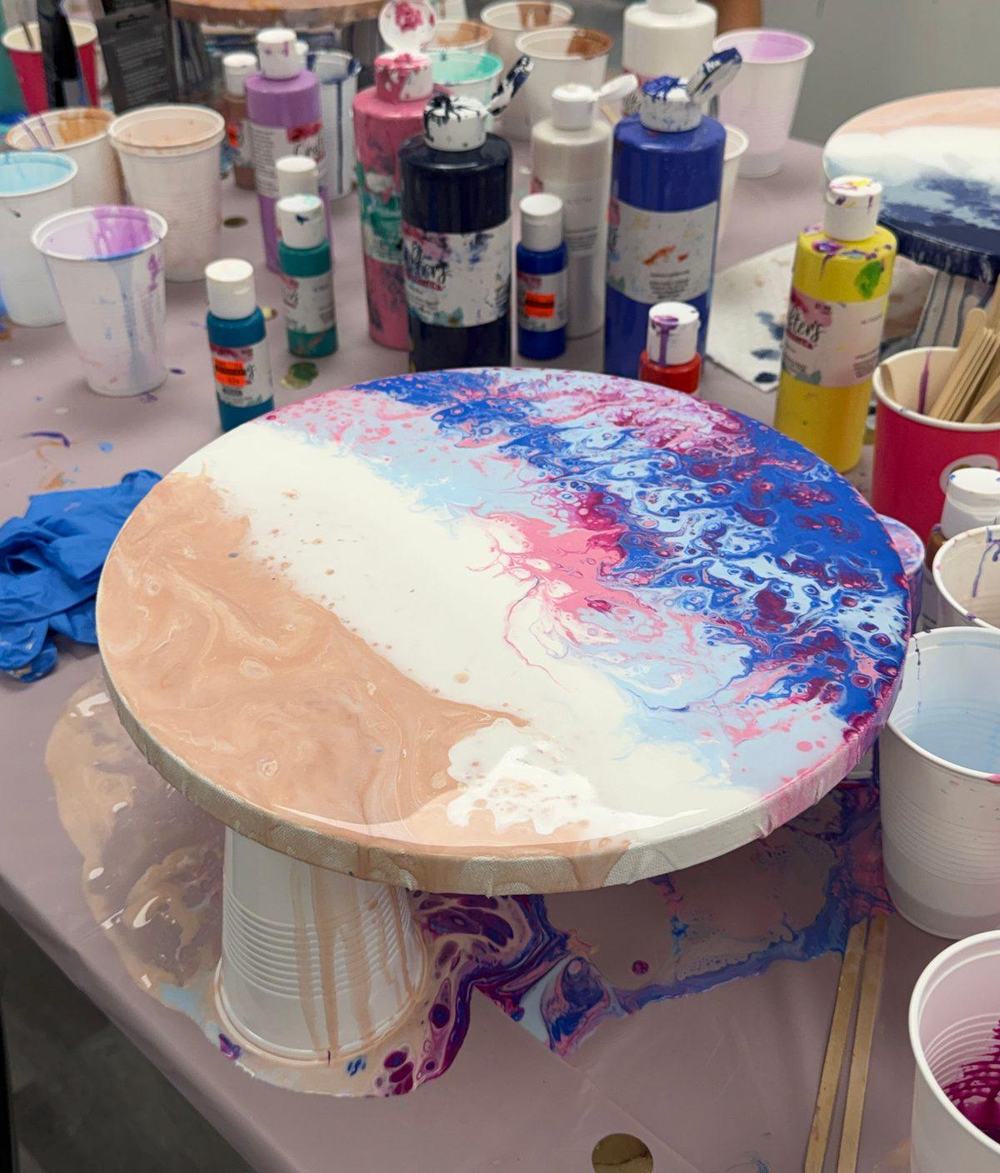
In acrylic pouring you don't draw at all. You mix acrylic paints until they are liquid, pour them onto a canvas, and tilt it slowly while the colors flow into each other. You choose the colors and the direction. The paint decides the rest.
For someone like me, who tries to control everything, that was the real lesson. You can't fix it, and it turns out beautiful anyway. Watching the paint move made me breathe slower, and for an hour my head was quiet.
2. Your First Evening
Start with three or four colors that you love together, plus white. Cover the table well, wear gloves and old clothes, and put the canvas on cups so the extra paint can drip off the edges. Pour, tilt, and then the hardest part: stop. Leave it to dry flat for a day or two and don't touch it. The first piece doesn't need to be good. It only needs to be yours.
The Creative Edit
An acrylic pouring kit for beginners with ready-to-pour paints and everything you need for your first fluid art pieces.
Shop the Edit3. Honest Notes
Fluid art is messy, much messier than you expect. Paint runs off the canvas and onto everything below it, so protect the table and the floor. It also uses more paint than regular painting, and the pieces need a flat, dust-free place to dry for at least 24 to 48 hours. Keep pets out of the room while the paint is wet; I learned that one quickly.
4. How to Choose a Kit
- A kit with pre-mixed, ready-to-pour paints saves you the most frustrating part for beginners.
- Look for a pouring medium included, if the paints are not pre-mixed.
- Several small canvases are better than one big one: you will want to try again.
- Gloves, cups and stirring sticks in the box mean you can start the same evening.
5. Questions People Ask
Do I need any drawing skills? None at all. That is the beauty of it.
How do I get those little "cells" in the paint? Cells come from the way the paints separate. Some people add a few drops of silicone oil, but for the first pieces, just enjoy what happens on its own.
I am not an artist. But I made something that was completely mine. You can too.